Security · IT Support
Why Security Tools Aren't Enough for SMEs
6 July 2026
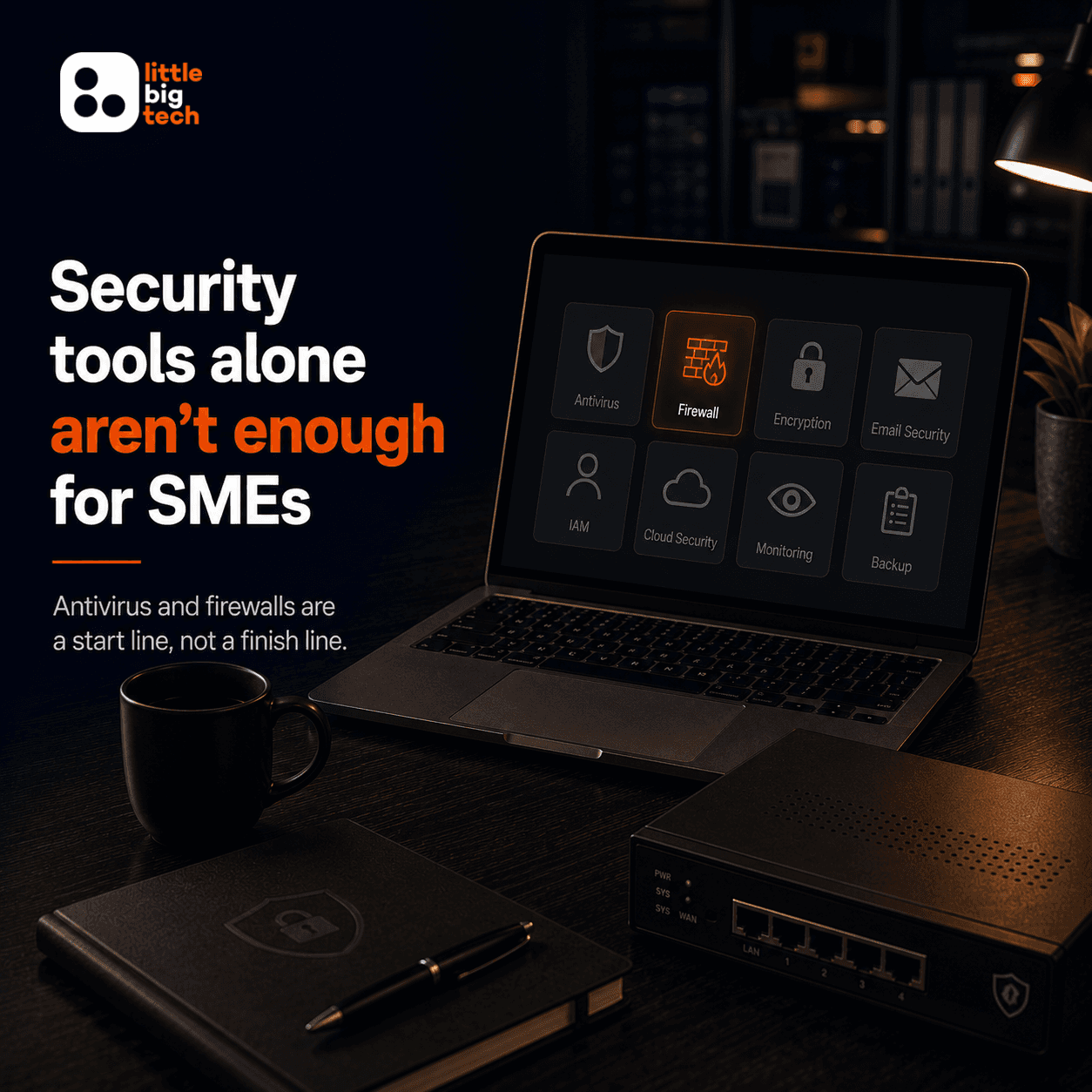
A surprising number of SMEs believe they're secure because they've bought security software. Antivirus is installed, there's a firewall on the router, email comes with some kind of spam filter. Boxes ticked, job done — except that's not how security actually works.
Tools are only as good as the configuration behind them and the people watching what they flag. A firewall nobody's reviewed in two years, or alerts nobody reads, offer very little real protection no matter how good the software itself is.
This article relates to the Cyber Security Controls domain of the Technology Resilience Score. It looks at whether your business's security tools are actually working, or just present.
Why security controls matter for growing businesses
Cyber security controls are the tools, configurations and processes used to protect systems, data and users from cyber threats. A coordinated security programme goes beyond installing tools — it ensures those tools are actively monitored, properly configured and supported by clear response processes.
- Security tools configured correctly for the business's specific environment
- Ongoing monitoring of what those tools are actually detecting
- A clear process for responding when something suspicious is flagged
- Regular review to make sure controls keep pace with new threats
Without active management, security tools become expensive background noise rather than genuine protection.
Why this matters as you scale
Growing SMEs often buy security tools in response to a specific worry — a near-miss, a client requirement, a renewal that happened to include extra features. The tool goes in, gets left on default settings, and nobody revisits it. There's no dedicated security function to keep watching, because the business has understandably prioritised its headcount elsewhere.
This creates a false sense of security that's arguably worse than having no tools at all, because it breeds complacency. The key question becomes: "If our security software flagged something serious tonight, would anyone actually see it and act?"
Is your business's technology environment resilient?
Find out whether your security tools are properly configured, monitored and backed by a response plan.
Get your Technology Resilience ScoreThe problem with tools-only security
Buying security software addresses part of the problem. Without ongoing management, significant gaps remain.
- Tools left on default configuration rather than tuned to the business's risk profile
- Alerts generated but nobody assigned to review or act on them
- No regular patching or update schedule across systems
- No tested plan for what happens if a threat gets through
A tool that isn't monitored is a tool that isn't really protecting anything.
What weak security controls look like in a growing business
These signs tend to appear in businesses that have invested in software but not in the process around it.
- Security software installed years ago with no review of whether it's still adequate
- No one checking security alerts or logs on a regular basis
- Multi-factor authentication missing on key business systems
- Inconsistent patching across laptops, servers and cloud services
- No documented incident response plan if a threat is detected
- Security decisions made once and never revisited as the business grows
Individually forgivable, collectively these gaps leave real exposure.
What strong looks like
A well-secured SME has the right tools in place, correctly configured for its actual risk profile, with someone actively monitoring what those tools report. Multi-factor authentication is standard across business systems, patching is consistent, and there's a clear, rehearsed plan for responding when something is detected.
The difference isn't necessarily more tools — it's active ownership of the tools already in place, so protection is real rather than assumed.
How this TRS domain helps businesses improve
The Technology Resilience Score assesses Cyber Security Controls as one of ten domains, looking beyond whether tools exist to whether they're genuinely effective.
- Reviews configuration and coverage of existing security tools
- Assesses whether alerts are monitored and acted upon
- Checks patching consistency and authentication standards
- Confirms an incident response process exists and has been tested
The result is a score out of 5 for this domain, giving you a clear baseline and a structured improvement path.
Moving from installed to managed
Security tools are a starting point, not a finish line. The businesses that stay resilient are the ones that treat security as an ongoing discipline — reviewed, monitored and adjusted — rather than a one-off purchase ticked off a list.
The Technology Resilience Score gives ambitious SMEs a benchmark across 10 domains, including Cyber Security Controls.
Related reading
Is your business's technology environment resilient?
Find out how prepared you really are to keep operating and recover quickly if disruption hits — with a free Technology Resilience Score™.
Our services