IT Support
Why System Connectivity Is Key to Operational Efficiency
27 July 2026
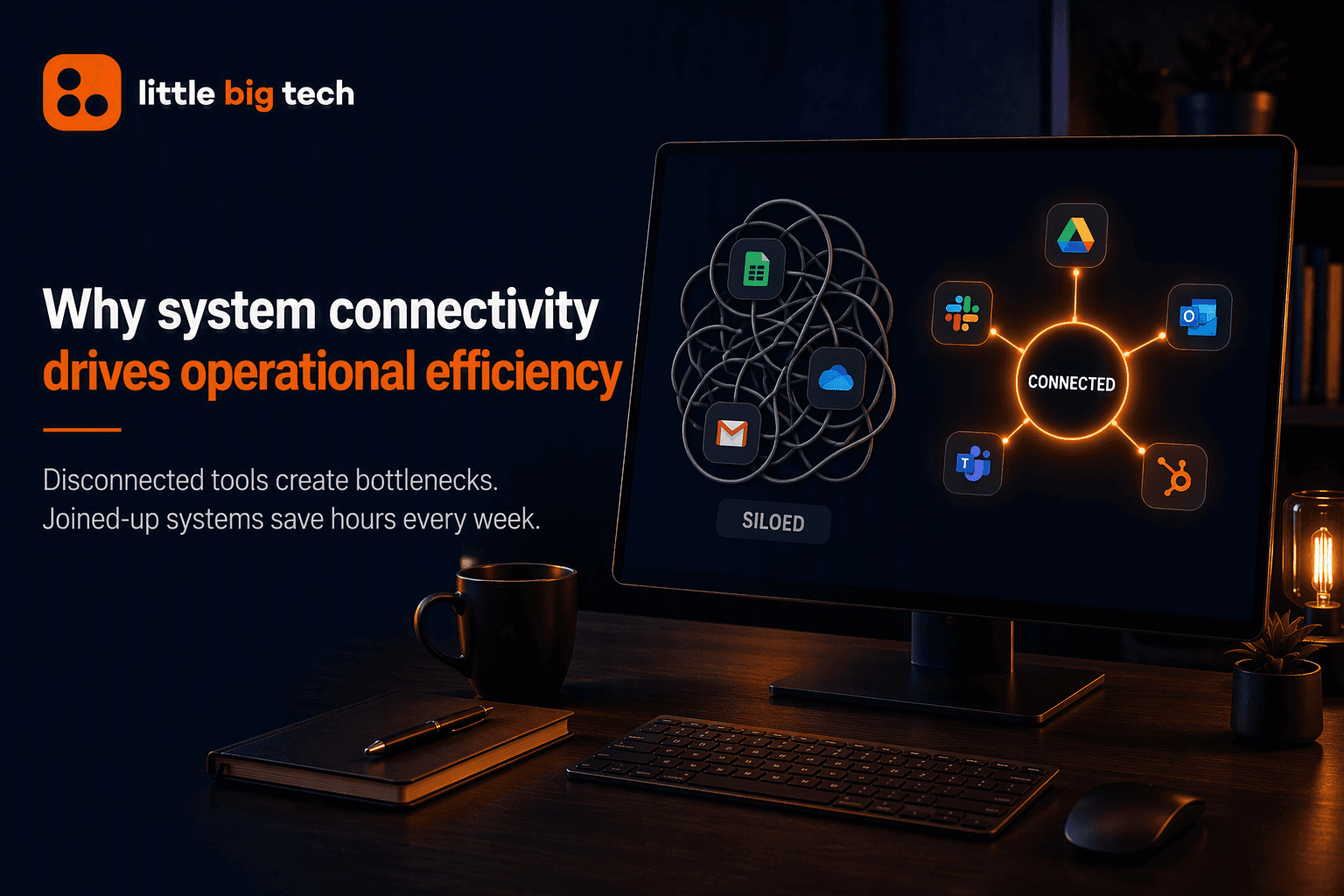
In today's fast-paced business environment, efficient and effective operations are crucial for success. For small and medium-sized businesses (SMEs) in particular, one of the biggest factors behind that efficiency is system connectivity, how well different platforms, tools and data sources work together instead of operating in isolation. When systems are connected properly, businesses spend less time dealing with manual processes and disconnected information, making it easier to improve productivity, support growth and make better decisions.
Disconnected systems create bottlenecks, make collaboration more difficult and reduce productivity. Most businesses have experienced the frustration of searching for information across multiple platforms, switching constantly between applications or manually sharing data between teams. As organisations become increasingly reliant on data, poor system connectivity becomes much harder to ignore.
The Challenges of Disconnected Systems
When systems aren't properly integrated, the effects are felt across the entire business.
- Isolated data: Information becomes trapped within individual systems, making it difficult for other teams to access or use when they need it.
- Duplicated work: Without shared data, employees often have to enter the same information into multiple systems, wasting time and increasing the likelihood of mistakes.
- Poor visibility: Leadership teams struggle to gain an accurate, real-time view of the business when information is spread across disconnected platforms.
- Slower decision-making: If pulling information together takes time, making informed decisions inevitably takes longer too.
The Benefits of Better System Connectivity
Improved Data Access
Connected systems provide real-time access to information from multiple sources, allowing teams to make informed decisions using the latest available data. Better visibility also gives employees across the business the context they need to identify opportunities and respond more quickly.
Automated Processes
Integrating systems allows many repetitive, manual tasks to be automated. This reduces administrative work, lowers the risk of human error and gives employees more time to focus on higher-value activities that contribute to the business.
Automation also helps businesses scale more effectively. As workloads increase, connected systems can handle routine processes consistently, without adding unnecessary administration or creating additional pressure for employees.
Enhanced Collaboration
When systems work together, it's much easier for employees to share information, collaborate on projects and stay aligned with wider business objectives. Instead of spending time searching for information or moving data between systems, teams can focus on getting work done.
How to Improve System Connectivity
Improving operational efficiency involves far more than simply connecting different systems. The goal is to create an environment where your applications, workflows and data all work together to support better decision-making. For many organisations, however, the reality is a collection of overlapping software, duplicated functionality, disconnected teams and unnecessary costs caused by using too many separate tools.
Improving system connectivity usually starts with a few practical steps:
- Reviewing the systems your business currently relies on and identifying where information or workflows break down between them.
- Identifying overlapping tools that could be consolidated or integrated more effectively.
- Investing in modern platforms and infrastructure that are designed to work together rather than independently.
- Putting the right network and connectivity foundations in place to support reliable integration across the business.
Frequently Asked Questions
What is system connectivity in a business context?
System connectivity refers to how well an organisation's software platforms, business applications and data sources are integrated, allowing information to move between them instead of remaining isolated in separate systems.
How do disconnected systems affect productivity?
Disconnected systems lead to duplicated work, delays in accessing information and poor visibility across the business. Together, these issues slow down day-to-day operations and make decision-making more difficult.
Is improving system connectivity a large, disruptive project?
Not necessarily. Many organisations improve connectivity gradually by focusing first on the systems causing the greatest friction, rather than replacing everything at once.
Getting Your Systems Working Together
System connectivity isn't just a technical issue. It has a direct impact on productivity, collaboration and how quickly your business can respond to opportunities. If your systems don't communicate effectively or your team spends too much time moving information between platforms, it's probably worth taking a closer look.
Our team can assess how well your existing systems work together and recommend practical improvements that suit your business. Get in touch to find out more, or read more about our business connectivity solutions.
Is your business's technology environment resilient?
Find out how prepared you really are to keep operating and recover quickly if disruption hits — with a free Technology Resilience Score™.
Our services